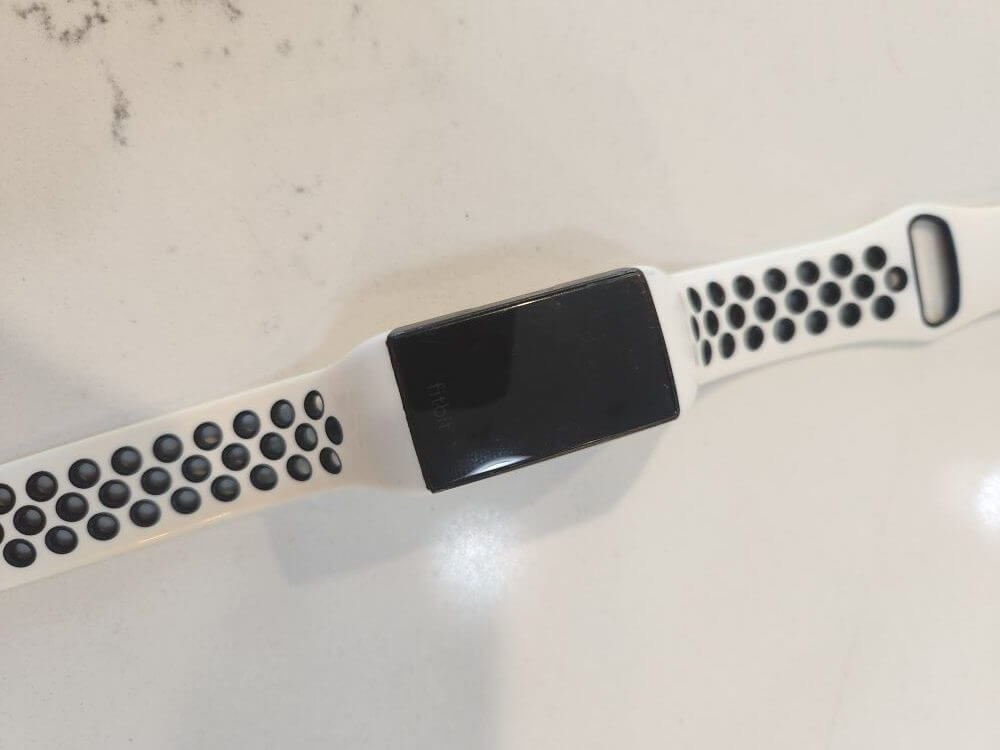
The relationship between swimming and wearable technology
By Brad Jones, Guest Contributor
Wearable technology has become extremely popular in the world of endurance sports. Runners, cyclists and triathletes love the data provided by these devices. In fact, wearable technology has been named the #1 fitness trend of 2022 by the American College of Sports Medicine. We are now seeing more and more devices developed specifically for competitive swimming.
For swimmers, performance data tracking can help you dial in your workouts, track stroke count, practice pace, speed, distance per stroke, underwater speed, and more. Devices can go under a swim cap, on a Google Strap, watches, smart glasses, and even in a swim paddle. Tracking data from wearable devices during training gives a swimmer or coach a way to see where you are improving and hold the swimmer accountable. If you have certain metrics you need to hit in practice to achieve your goals, the data (if accurate) is there for you and your coach to track. However, devices can also lead to information overload and can be overwhelming, confusing, and downright distracting if you don’t use them in a healthy way.
A 2020 study from the University of Copenhagen (“Fitness watches generate useful information but increase patient anxiety”) concluded that sports performance data from wearable devices can lead to “increased levels of uncertainty, fear and anxiety, and lead to obsessive and dependent behaviors.”
Before you buy the next expensive wearable gadget for your team or yourself, ask yourself a few questions. Why am I collecting this data? What decision(s) will I make with it? Do we really need all this data? When is it time to move away from data? As coaches, do we really want our swimmers glued to their phones after practice, analyzing data? Remember that data is useless if you don’t use it to make training decisions.
Problems can start when you get too caught up in your data, which a) may or may not be accurate; and b) cannot capture the nuances of being human. How do you know if the data from these devices is even accurate? There have been many recent studies on the accuracy of different wearable devices. Device data can be extremely inaccurate. For example, studies have shown a “systematic overestimation of distance”.
Swimmers can’t just be data points. Data points are just one piece of the puzzle, but they don’t take into account subjective things like a conflict with a teammate, a tough exam at school, playing video games late the night before, or that tough workout. on dry land than you did earlier in the week. Most exercise physiologists agree that there is so much power in looking at why something happened, that an algorithm can’t tell you.
Exercise physiologist Kevin Longoria said: “The harsh reality is that there are no regulations that require these device manufacturers to compare their data outputs against any kind of benchmark medical equipment. , resulting in significant disparities in data integrity within and between wearable technologies.
“With the advent of more sensors, devices, and data, it’s not uncommon to feel overwhelmed with data,” says Longoria.
Many swimmers know the feeling of being “in the flow” during a workout. These internal states are happy and worth pursuing to their own end, and that’s often where the best performance happens. If a swimmer finds themselves unable to reach these states because they are constantly distracted or pulled out to check their current pace, heart rate or stroke count, it is time to stop using the data for a while and focus on reconnecting with the inner self. You can always stay focused on the measurements you need to achieve in practice, without being distracted by a device. Let’s face it, most swimmers know when they hit the numbers they need to hit in practice.
The occasional practice without data (turning it off or, even better, not wearing it at all) can be so much more rewarding. Another approach could be to treat the data as we do with “test sets”. Put on wearable technology once a month, collect data and compare to previous months. Appreciate the practice for what it is and how you feel, don’t let the data dictate success or failure.
Data and associated technology is a tool to improve your training performance. When we start a new season, data can be invaluable in prescribing watchdog training volume and our response to it, but it shouldn’t be the only measure of success. Resist the pressure to collect more and more. Instead, focus on quality data that has a demonstrable impact on your swimmer’s health and performance.
Brad Jones is assistant coach and head coach of the Bellingham Bay swim team.
All comments are the opinion of the author and do not necessarily reflect the views of Swimming World Magazine or its staff.
Commentaires
Enregistrer un commentaire